College News
College Presidents Board Report
At each Board Meeting, the college presidents give a report on their college, highlighting events and news around the college.
You can view Woodland Community College President Navarette’s report here.
Please note, Vice President Morehouse delivered a verbal Yuba College report, which will be available in the approved Board minutes following the August 14, 2025 Board Meeting.
______________________________________________________________________________________________________________
District Office News
Impacts of One Big Beautiful Bill on Higher Education
Over the past six months, changes in federal laws and policies have resulted in a great deal of impact on colleges and universities across the country, particularly the One Big Beautiful Bill (OBBB). The passage of OBBB marks a turning point in federal higher education policy—but for community colleges, the full picture is still unfolding. Here are a few important highlights:
- A significant OBBB win for community colleges is the creation of Workforce Pell Grants for short-term, high-value training programs. Community colleges are well-positioned to benefit, as many already offer these programs and have strong ties to local industry.
- No changes were made to Pell Grant credit requirements.
-
- However, the maximum Pell could be reduced. The maximum Pell award for the 2026–2027 academic year has not yet been finalized. Based on the Trump administration’s proposal, students could see a reduction of nearly $1,700.
-
- Accountability-based earnings test passed in place of proposed institutional risk-sharing system. Instead of risk-sharing, the new accountability system institutes an earnings test. If graduates’ earnings in a particular academic program are too low, the program will lose eligibility for federal student loans. This system excludes undergraduate certificate programs.
- TRiO and FSEOG could be eliminated, and Work-Study may face cuts.
- Both colleges applied for continuation of TRiO grants. Yuba College received notification that its application was approved for the next five years; meanwhile, Woodland Community Colleges application was not approved.
- The Hispanic Serving Institution (HSI) Program faces challenges in court.
-
- A lawsuit brought by the state of Tennessee and Students for Fair Admissions in June argues that HSI program’s ethnicity-based eligibility criteria are unconstitutional and discriminatory. Woodland Community College received a five-year HSI grant in 2024. We will monitor the lawsuit closely.
-
- The U.S. Supreme Court has allowed the President Trump to proceed with downsizing the Department of Education, lifting a lower federal court’s decision to block mass layoffs and the transfer of key functions to other agencies as legal challenges play out.
Public Confidence in Higher Education Saw Significant Increase
A recent Gallop Poll reported that Americans’ confidence in higher education has increased for the first time in a decade, with 42% now expressing “a great deal” or “quite a lot” of confidence—up from 36%.
______________________________________________________________________________________________________________
Farewell and Happy Retirement to Thomas “Jay” Lowden
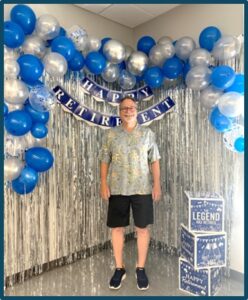 After more than five years of dedicated service, Thomas “Jay” Lowden officially retired in June 2025 from his role as Director of the Yuba Community College District Foundation. Since joining the District in May 2019, Jay has been a steadfast leader, guiding the Foundation’s fundraising and development efforts with purpose, care, and nearly 45 years of experience in the nonprofit sector.
During his tenure, Jay helped elevate the visibility and impact of the Foundation, growing its portfolio, launching new giving initiatives, and working hand-in-hand with College leadership to advance fundraising events and student-focused programs. His efforts have resulted in the awarding of scholarships to hundreds of students across the District—an enduring legacy of support for access and success.
As a valued member of the Chancellor’s Cabinet, Jay brought thoughtful insight and a collaborative spirit to policy discussions and strategic decision-making. He was known for his calm demeanor, respectful leadership, and deep commitment to the District’s mission.
Beyond his professional accomplishments, Jay’s strong community ties proved invaluable—strengthening partnerships, resolving sensitive issues, and shining a light on the incredible work happening across YCCD’s campuses.
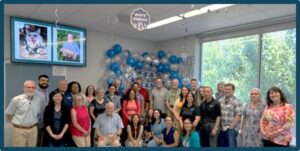
While we are excited for Jay as he begins this new chapter of retirement, his contributions, presence, and bright spirit will be deeply missed. We extend our heartfelt congratulations and sincere gratitude for all he has done in service to the District.
We wish him all the best in this well-earned next chapter.
______________________________________________________________________________________________________________
2025-2026 District Handbook Now Available Online

The 2025-26 District Handbook is now available online. Updated annually with various information, it serves as a one-stop shop for valuable information about the District. You can view it here.
Chancellor Pan Launches Monthly Virtual “Open Door” Sessions
 To better accommodate busy schedules and connect with more members of our campus community, Chancellor Pan will now be offering monthly virtual Chancellor’s Open Door sessions.
These informal gatherings provide faculty, staff, and students across the Yuba Community College District an opportunity to engage directly with the Chancellor in a relaxed, conversational setting.
Have a question, idea, or just want to say hello? Stop by virtually and join the conversation.
The sessions will be held via Zoom meeting link and the schedule is as follows:
- Wednesday, September 24: 2:00 p.m. – 3:00 p.m.
- Wednesday, October 18: 10:00 a.m. – 11:00 a.m.
- Monday, November 17: 3:00 p.m. – 4:00 p.m.
- Friday, December 12: 1:00 p.m. – 2:00 p.m.
- Thursday, January 22: 2:00 p.m. – 3:00 p.m.
- Wednesday, February 18: 9:00 a.m. – 10:00 a.m.
- Monday, March 16: 10:00 a.m. – 11:00 p.m.
- Friday, April 17: 2:00 p.m. – 3:00 p.m.
*dates are subject to change
 District Holiday Closures
Monday, September 1: Labor Day
Next Regular Board Meeting
The Board of Trustees will meet for their regular meeting on Thursday, August 14, 2025 at Woodland Community College. The agenda will be released 72-hours prior to the meeting here.
District Safety & Risk Management
Meet Your Campus Resource Officers!
 Have you seen a sheriff’s deputy at Yuba College–Marysville or a police officer at Woodland Community College–Woodland? If so, you have likely encountered one of our new Campus Resource Officers—Deputy Prince or Officer Flores—who are now serving full-time on campus to help foster safe and healthy learning environments for students and staff.
Campus Resource Officers (CROs) play a vital role in supporting our college community. They provide safety guidance, emergency response information, and general support to both students and employees.
Next time you see them, feel free to introduce yourself and give them a warm welcome to campus. You are also encouraged to invite them to your department meetings; they are happy to share insights and answer questions about their role.
______________________________________________________________________________________________________________
Fiscal Update

Bond Refinancing Underway to Save Taxpayers Money
Yuba Community College District is moving forward with a major bond refinancing initiative aimed at reducing the tax burden on our local communities. At the July Board of Trustees meeting, the district received authorization to proceed with refinancing eligible bonds. This strategic move is part of our ongoing commitment to sound fiscal stewardship.
Historically, YCCD has saved taxpayers over $100 million through previous bond refinancings. You can read more about those historical efforts here:
This current effort continues that legacy of financial responsibility. Our strong credit standing, recently reaffirmed by Moody’s with commendations for prudent fiscal management, helps position the District for successful refinancing outcomes:
The following article was published in the Appeal-Democrat reflecting the district’s bond rating and refinancing efforts:
We will continue to provide updates as the refinancing process progresses.
2025–26 Enacted State Budget – Impacts to California Community Colleges and YCCD
The State of California enacted the 2025–26 Budget on June 27, 2025, against a backdrop of growing economic uncertainty. While the administration initially projected a balanced budget in January—based on a two-year framework outlined in the 2024 Budget Act to address a $30 billion deficit—revised revenue estimates revealed an additional $12 billion shortfall. This was largely due to stock market volatility, potential federal tariff impacts, rising Medi-Cal costs, and anticipated federal cuts to health and social service programs.
State Budget Overview for California Community Colleges
Despite these challenges, the enacted budget prioritizes stability for the California Community Colleges (CCC) and avoids core reductions to programs or services. Total system funding remains relatively flat compared to 2024–25.
🔹 Ongoing Investments
The budget includes approximately $404 million in ongoing adjustments, including:
- $217.4 million for a 2.3% Cost-of-Living Adjustment (COLA) to the Student-Centered Funding Formula (SCFF)
- $26.8 million for a 2.3% COLA to select categorical programs
- $140 million to support 2.35% enrollment growth, phased over two years:
- $100 million beginning in 2024–25
- $40 million beginning in 2025–26
🔹 One-Time Funding Initiatives
One-time Proposition 98 investments are largely aligned with the CCC Chancellor’s Office Master Plan for Career Education and equity-focused student supports. Below are some of these funding sources:
| Initiative | Allocation |
| Student Support Block Grant | $60 million |
| Career Passport (digital record of career competencies) | $25 million |
| Emergency Financial Aid | $20 million |
| Credit for Prior Learning Expansion | $15 million |
| Systemwide Common Data Platform | $12 million |
Implications for Yuba Community College District
The 2025–26 State Budget presents both fiscal constraints and strategic opportunities for YCCD. Key considerations for the district include the following:
- SCFF Deferrals and Cash Flow Management
The budget defers $408.4 million in SCFF apportionments from 2025–26 to 2026–27. YCCD will conduct a detailed cash flow analysis to ensure sufficient reserves and liquidity are available to support its’ uninterrupted operations during the deferral period for the impact anticipated to the district.
- Transition to New SCFF Funding Floor
With the expiration of the Hold Harmless provision in 2024–25, the district’s 2024–25 Total Computational Revenue (TCR) is now established as its funding floor. Beginning in 2025–26, YCCD will receive the greater of:
- Its actual SCFF-calculated earnings for the year, or
- Its 2024–25 TCR
This change removes the automatic addition of the COLA to the funding floor. Instead, the 2.3% COLA is now embedded within the SCFF rates and must be earned. Districts will only benefit from the COLA if their current-year metrics generate a Total Computational Revenue (TCR) that exceeds either their 2024–25 funded floor or their prior year calculated funding plus COLA in stability situation.
- Strategic Emphasis on SCFF Metric Improvement
To maximize funding, the district must improve performance in key SCFF areas:
- Enrollment (FTES)
- Supplemental metrics (e.g., Pell Grant recipients)
- Student success outcomes (e.g., degrees, certificates, transfers)
Based on actual performance, the district could receive its 2024–25 funding level, a portion of COLA, or the full COLA if growth in these metrics is achieved for prior year or the current.
- Growth Funding Opportunities
The state budget provides $140 million to support 2.35% systemwide enrollment growth over two years—$100 million in 2024–25 and $40 million in 2025–26.
Based on Advance Apportionment calculations released by the Chancellor’s Office, YCCD has been granted a 0.13% growth authority for 2025–26 which equates to $52,449. The district will evaluate its enrollment trends, operational capacity, and risk tolerance to determine whether to pursue this limited growth opportunity, keeping in mind that any unfunded growth would represent unfunded FTES.
- Federal Pell Policy Changes and SCFF Risk
The original version of the One Big Beautiful Bill Act would have eliminated eligibility for Pell for students who are enrolled as part-time students. The updated version introduces several changes to Pell Grant eligibility and award rules, effective July 1, 2026. These changes will impact both student financial aid and YCCD’s revenue under the Student-Centered Funding Formula (SCFF). This change could reduce YCCD’s supplemental and success allocation under the SCFF, if Pell amounts impact on the district’s enrollments.
- Part-time students remain eligible for Pell Grants. However, the amount awarded may vary based on financial circumstances and new federal rules.
- New rules for Pell Grants will require students to include any foreign income when applying; students won’t qualify for Pell if their Student Aid Index is twice the maximum award or if other grants already cover all their college costs—and any time they are ineligible for these reasons will still count against their total Pell Grant limit.
- Students whose other grants fully cover their cost of attendance will be ineligible for Pell.
- The new Workforce Pell Grants provide financial aid for short-term, career-focused training programs (8–15 weeks, 150–600 hours), expanding opportunities for nontraditional students.
- Potential Need for Deficit Factor Planning
To proactively manage potential revenue losses resulting from changes in Pell eligibility, the district will evaluate whether to build in a local deficit factor as part of its internal planning. This would help mitigate financial risk and maintain balanced budgeting while further data on the impact becomes available.
In summary, YCCD’s financial outlook will depend on its ability to grow enrollment and student success outcomes, proactively manage cash flows considering the cash deferrals from the state, and mitigate emerging risks tied to federal policy shifts impacting Pell recipients.
For further details, please refer to the 2025 Joint Analysis of the Enacted Budget.
______________________________________________________________________________________________________________
Recently Reviewed Board Polices & Administrative Procedures
Each year the Board receives Administrative Procedures (AP) that were reviewed by the Chancellor’s Office or the responsible District Services Executive during the fiscal year.
These APs were determined to have no changes or minor changes for the 2024-2025 fiscal year.
These APs were determined to have substantive changes for the 2024-2025 fiscal year.
______________________________________________________________________________________________________________

—– For current open positions, visit our hiring webpage for more information. —–
______________________________________________________________________________________________________________
Mission Statement: Yuba Community College District provides all individuals in our diverse communities access to high-quality, affordable higher education that is responsive to student needs. Our mission is to inspire and advocate for student success through our passion and commitment to teaching, learning, and social justice.
Vision: Our vision is to empower our students and strengthen our communities by providing equitable, student-centered learning opportunities.
______________________________________________________________________________________________________________
Would you like to have an event highlighted in a future newsletter?
 Email dwilliam@yccd.edu for consideration.