College News

College Presidents Board Report
At each Board Meeting the college presidents give a report on their college, highlighting events and news around the college.
⏩You can view Woodland Community College President Navarette’s report here.
⏩You can view Yuba College President Dotson’s report here.
______________________________________________________________________________________________________________
District Office News
Board Honors Student and Academic Leadership
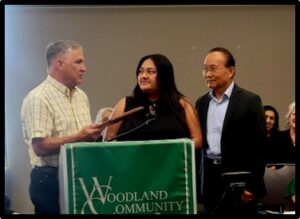 At the May 14 Board Meeting, the Governing Board presented plaques of appreciation in recognition of the commitment and service of Tamara Nino-Villegas, Student Trustee of Woodland Community College, for the 2025–2026 academic year and her service to the Board.
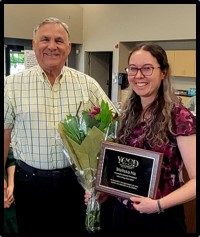
The Board also recognized Melissa Ha, Professor at Yuba College, for her leadership, commitment, and support of student learning and success during her term as Academic Senate President for the 2024–2026 Academic Years.
______________________________________________________________________________________________________________
Notice: Chancellor Pan’s Monthly Virtual “Open Door” Sessions
Chancellor Pan will resume virtual open-door sessions in September 2026, providing employees with an opportunity to connect, ask questions, and engage in open dialogue.
 District Holiday Closures
Monday, May 25: Memorial Day
June 5 – July 31: YCCD summer work schedule, offices will be closed on Fridays
Thursday, June 18: Juneteenth National Independence Day
Thursday, July 3: 4th of July Holiday
Next Regular Board Meeting
The Board of Trustees next regular meeting is on Thursday, June 11, 2026 at Yuba College. The agenda will be released 72-hours prior to the meeting here.
______________________________________________________________________________________________________________
Fiscal Update
 Governor’s May Revision for 2026‑27 Budget, LAO Overview, and CCC Funding Details
The Governor’s 2026–27 budget process reflects two key milestones. In January, the Administration proposed a budget with a $42.3 billion revenue surge, driven largely by capital gains tied to stock market performance and artificial intelligence investments, but still projected a $2.9 billion deficit due to ongoing cost pressures.
The May Revision significantly improves the state’s near-term outlook. With revenues revised upward by roughly $16.5 billion, the Governor now presents a balanced budget for 2026–27 and 2027–28, maintaining reserves and ending each year with positive balances.
This balance, however, is achieved through a combination of higher revenues and deliberate policy solutions, including approximately $14 billion in budget actions such as revenue increases, spending adjustments, borrowing tied to Proposition 98 obligations, and the use of tools like the Temporary Surplus Holding Account (TSHA) to shift resources across fiscal years
The Legislative Analyst’s Office (LAO) acknowledges that the May Revision successfully balances the budget over the next two years but raises important concerns about the underlying fiscal condition of the state.
The LAO emphasizes that the state is heavily relying on the one-time funding sources for its’ ongoing structural deficit issues. The plan relies heavily on roughly $20 billion in reserve withdrawals and suspended deposits, along with borrowing and the use of the Temporary Surplus Holding Account (TSHA) to manage timing differences between fiscal years.
Despite a strong revenue environment, the LAO concludes that California now faces a structural imbalance, where ongoing expenditures exceed ongoing revenues. Under current projections, the state is expected to face operating deficits of about $10 billion annually in the out years, even after the improvements reflected in the May Revision.
The LAO also highlights that revenue growth is heavily dependent on volatile capital gains, meaning that even a modest market downturn could quickly reverse the state’s fiscal gains and lists a heavier impact to the California Community College funding.
Next Steps in the State Budget Process:
The post-May Revise phase follows this sequence of events:
- Subcommittee Reviews: Budget subcommittees in the Assembly and Senate review the May Revision proposals, integrating them into their respective legislative budget frameworks.
- LAO Analysis: The Legislative Analyst’s Office (LAO) continues issuing detailed, rolling analyses of the May proposals to inform these hearings.
- Legislative Deadline (June 15): The Legislature must constitutionally pass a balanced budget bill by midnight on June 15. The bill typically must be in print by June 12 to meet the 72-hour rule before being voted on.
- Conference Committee & Negotiations: Differences between the Assembly and Senate versions are reconciled, often through a joint legislative budget conference committee.
- Final Passage and Signature: After both houses vote on the final compromise package, it is sent to the Governor for final approval and signature before the fiscal year begins on July 1.
California Community Colleges (CCC) Funding
Ongoing Funding (January Proposals Continued and Enhanced)
- 4.31% COLA for SCFF apportionments
- Includes:
- 2.87% statutory COLA (updated from 2.41% in January)
- 1.44% discretionary augmentation tied to implementation of paid pregnancy disability leave
- 2.87% COLA for select categorical programs (Adult Education, EOPS, DSPS, CalWORKs, CARE, Apprenticeship RSI, etc.)
- 1.5% enrollment growth over two years (carried forward)
- 1.0% growth in 2025–26
- 0.5% growth in 2026–27
(No change from January proposal)
Programmatic Investments (Carried Forward)
- $38.1 million ongoing increase for Calbright College
- $5 million ongoing for the Common Cloud Data Platform
- $2 million ongoing for Credit for Prior Learning (CPL)
One-Time Investments (Largely Maintained with Minor Additions)
Carryover from January
- $120.7 million for Deferred Maintenance and Facilities
- $100.6 million for Student Support Block Grant (slight increase from January)
- $36 million for Common Cloud Data Platform (scale-up)
- $35 million for Credit for Prior Learning initiative
- $408.4 million for deferral repayment
- $88.7 million to cover SCFF shortfall (2025–26)
Enhanced / New in May Revision
- $9.7 million for Adult Learner Demonstration Project (new)
State Budget & Proposition 98 Outlook
- The Proposition 98 minimum guarantee is adjusted upward for 2024‑25 and 2025‑26 due to revenue increases, setting the 2026‑27 K‑14 guarantee at $125.5 billion.
- The CCC share remains close to the traditional 11% across all three fiscal years.
- The budget creates a new $5.6 billion Proposition 98 settle‑up obligation for 2025‑26, to be addressed in future years.
State reserves are anticipated to a total of $23 billion at the end of 2026‑27. Of which, $4.1 billion is anticipated to serve a Public School System Stabilization Account (PSSSA) for Proposition 98.
______________________________________________________________________________________________________________

—– For current open positions, visit our hiring webpage for more information. —–
______________________________________________________________________________________________________________
Mission Statement: Yuba Community College District provides all individuals in our diverse communities access to high-quality, affordable higher education that is responsive to student needs. Our mission is to inspire and advocate for student success through our passion and commitment to teaching, learning, and social justice.
Vision: Our vision is to empower our students and strengthen our communities by providing equitable, student-centered learning opportunities.
______________________________________________________________________________________________________________
Would you like to have an event highlighted in a future newsletter?
 Email dwilliam@yccd.edu for consideration.